

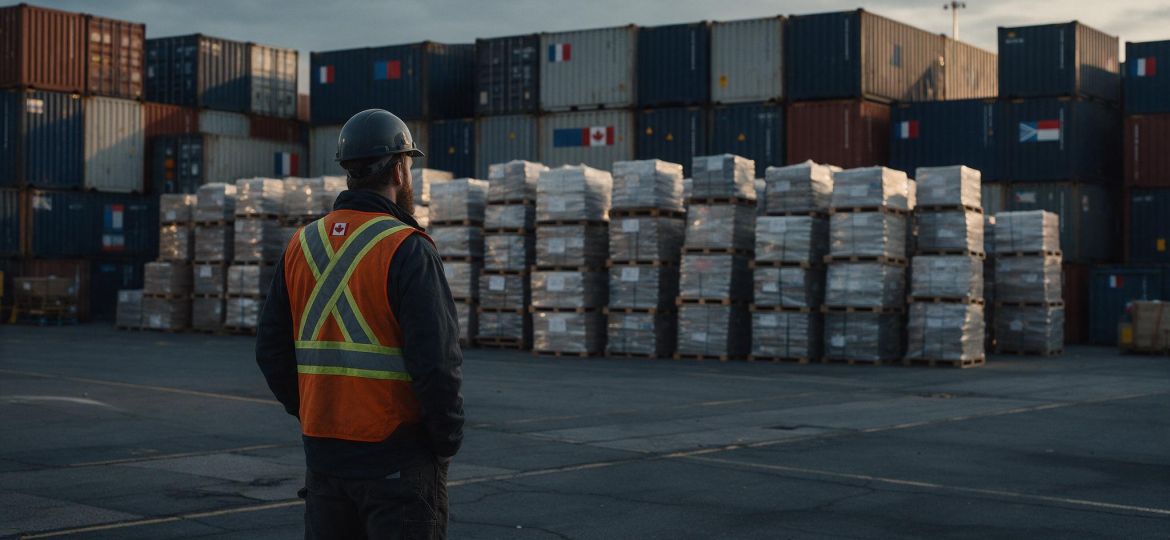
The trade dispute between Canada and the United States just got more serious. New American measures set to take effect on September 29, 2026 will ban imports of certain Canadian dairy products, most alcoholic beverages, and some motorcycles and mopeds, with additional restrictions on molasses products. Canadian companies are also being shut out of large, long-term U.S. government contracts.
This follows an earlier round of U.S. tariffs of 50% on roughly 5% of Canadian imports, which Canada answered with its own tariffs of 15%, 25%, or 50% on about $20 billion in American goods, hitting everything from steel and aluminum to cheese, appliances, clothing, cosmetics, and farm equipment. Prime Minister Mark Carney has defended Canada’s response as necessary to protect Canadian workers, while admitting there will be short-term economic pain. His longer-term plan leans on more domestic investment, stronger infrastructure, building more at home, and diversifying trade beyond the U.S., a tall order when more than 70% of Canadian exports still go south of the border.
Canada is reportedly looking at a closer relationship with the European Union, though nothing concrete has been settled. Trade officials from both countries are still talking, but neither side seems eager to make the first big move toward de-escalation. That leaves a real tension at the centre of all this: how do you protect workers and businesses right now while trying to reduce dependence on the American market over the long haul?
What follows isn’t a forecast. It’s a set of questions worth sitting with, whether you’re an employer trying to plan ahead, a worker trying to protect yourself, or someone in government trying to figure out where support is needed most.
How this could show up for Canadian and Ontario workers
The industries most directly named in these measures, dairy, alcohol, and certain vehicle manufacturing, aren’t spread evenly across the country. Some Ontario communities have a much heavier concentration of these jobs than others, and it’s worth asking which regions and sectors are carrying the most exposure right now, including the businesses that supply into those industries without directly exporting anything themselves.
Job loss is often the last stage of a much longer process, not the first sign of trouble. Reduced hours, cancelled overtime, and quiet hiring freezes tend to show up well before layoffs do, and they can erode household income just as seriously. The ripple effects also travel further than most people expect. When an exporter loses American customers, that pressure moves through suppliers, shipping and logistics companies, and the small businesses in town that depend on all of them spending locally, even if those businesses never sold a single product across the border themselves.
There’s also a harder truth buried in Canada’s own response. Retaliatory tariffs on American goods can raise costs for Canadian households too, which means workers already stretched thin on groceries, appliances, or clothing could feel a squeeze from both directions at once. And within any workforce facing disruption, some employees will have a much harder time landing on their feet than others. Identifying who’s most at risk, whether due to age, tenure, industry-specific skills, or personal financial circumstances, and reaching out early rather than waiting for a layoff notice, matters more than it usually gets credit for.
What workers can do to protect themselves
Nobody wants to spend their days watching for signs that their employer might be struggling. But there are usually signals worth paying attention to: shrinking overtime, delayed projects, hiring freezes, or a general shift in tone from leadership. The harder part is figuring out how to ask about job security without the question itself feeling like an accusation or a threat. Framing it as genuine interest in the business’s direction, rather than a demand for reassurance, tends to land better.
On the financial side, the honest reality is that most people can’t simply build a six-month emergency fund on short notice. What’s more realistic is figuring out which expenses could be trimmed quickly if hours were reduced, and understanding what support programs actually exist before they’re needed. That includes knowing your rights around reduced hours, temporary layoffs, and severance offers under Ontario employment law, and knowing where to get advice that’s actually reliable rather than guessing based on what a coworker heard secondhand.
It’s also worth thinking now, rather than later, about which of your skills would transfer into a different industry, and being cautious about spending money on training or credentials that sound impressive but don’t connect to real job openings. Employment service organizations, professional networks, and job-search resources are far more useful before a layoff than after one. Building those connections while you’re still employed puts you in a much stronger position if things do change.
Where the federal government can help
Income support systems need to be flexible enough to catch people whose hours are cut rather than eliminated outright, and they need to work for people in seasonal, temporary, or contract roles who often fall through the cracks of programs designed around full-time, permanent employment. That gap has caused real hardship in past downturns, and it’s worth asking whether current programs have actually closed it.
For small businesses, the right mix of grants, loans, and wage support is the difference between a company that keeps its staff through a rough patch and one that’s saddled with debt it can’t recover from afterward. Diversifying away from the American market sounds straightforward in a policy speech, but it’s genuinely hard for a small business without dedicated staff or resources to find new customers in unfamiliar markets. Federal support that makes that process practical and affordable, rather than theoretical, would matter a great deal here. Infrastructure investment and government purchasing decisions could also open real opportunities for Canadian businesses and workers while trade diversification is still taking shape. And as this dispute continues, there’s a fair question worth asking honestly: how does the federal government know whether its retaliatory tariffs are actually protecting Canadian workers, versus adding pressure on top of what the U.S. measures are already causing?
Where the Ontario government can help
Support at the provincial level needs to reach the specific industries and communities carrying the heaviest load, and it needs to reach smaller employers just as effectively as larger ones, who often have more resources to navigate applications and paperwork in the first place.
Retraining only helps if it’s tied to real, current vacancies, not general upskilling for its own sake, and it needs to be affordable and structured so people can keep earning while they learn. Ontario-funded employment services and local small-business support organizations have a real role to play here too, both in helping employers retain staff through a rough stretch and in connecting displaced workers with genuine opportunities rather than just referrals. There may also be an opening for provincial purchasing decisions and eased interprovincial trade to help Ontario businesses recover some of what’s been lost to American buyers, though turning that opportunity into stable, lasting jobs will take deliberate follow-through rather than good intentions alone.
Finally, none of this works well if federal and provincial responses operate on separate tracks. Workers and small businesses shouldn’t have to figure out which government offers what, fill out duplicate paperwork, or wait through delays caused by poor coordination. How that coordination happens, and how its success gets measured, deserves as much attention as the support programs themselves.
Where this leaves us
Trade disputes like this one tend to unfold slowly enough that it’s tempting to wait and see. But the workers and communities most exposed to these measures don’t have the luxury of waiting for certainty. Employers, employment support organizations, and all levels of government have a role to play in making sure people aren’t left to navigate this alone, and in making sure the response is ready before the disruption fully arrives, not after.
If this trade dispute is affecting your job or your business, where can you go for help?
Job Skills is here for exactly this kind of moment. Whether you’re a job seeker navigating reduced hours or a layoff, or a business trying to plan ahead instead of react, our team can connect you with the right training, funding, and employment supports. Visit jobskills.org to learn more or connect with a member of our team.
