
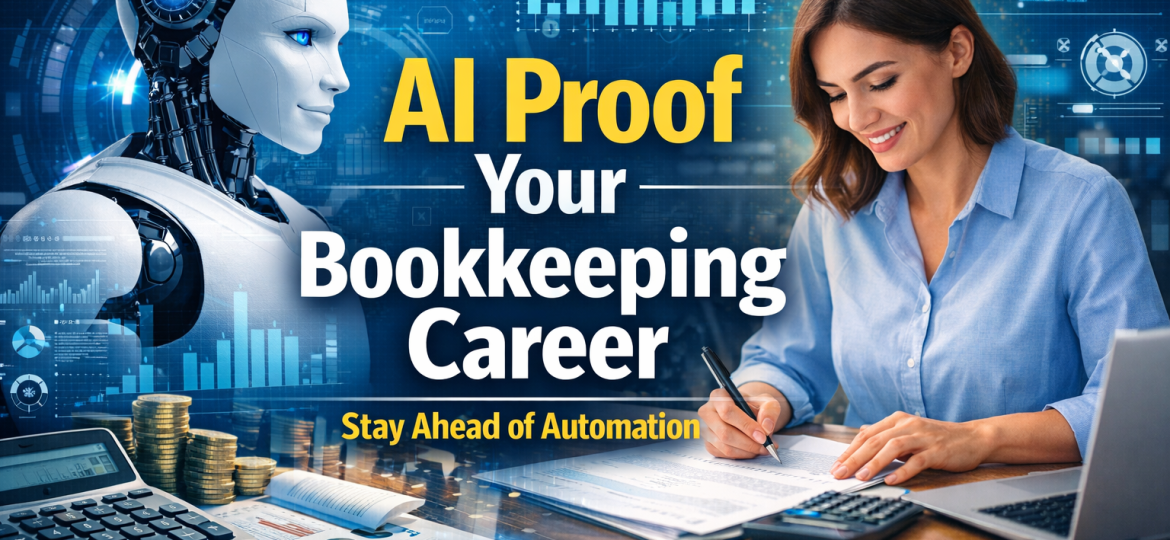
Artificial intelligence is transforming nearly every industry, and bookkeeping is no exception. Many professionals are wondering whether AI will eventually replace bookkeepers entirely or simply change the way the work is done. The truth sits somewhere in the middle. AI will automate many routine bookkeeping tasks, but the profession itself is evolving rather than disappearing.
If you want to AI proof your bookkeeping career, the key is understanding how technology is changing the field and positioning yourself as a professional who works with AI rather than competing against it.
Whether you’re considering a career in bookkeeping or already working in the field, here is what you need to know about the future of the profession and how to stay ahead.
Is AI a Threat to Bookkeeping Jobs?
AI is expected to significantly impact bookkeeping roles, particularly those focused on repetitive administrative work. In fact, many industry forecasts suggest that accounting, bookkeeping, and payroll clerk roles will experience notable changes over the next several years as automation becomes more common.
The reason is simple. Many bookkeeping tasks rely on structured data and predictable workflows, which makes them ideal for automation. Activities such as data entry, invoice processing, and bank reconciliations can already be performed by AI powered software with remarkable speed and accuracy.
However, that does not mean bookkeeping will disappear. Instead, the profession is shifting toward higher value responsibilities. As routine tasks become automated, bookkeepers are increasingly expected to focus on analysis, financial insight, and advisory services that help businesses make better decisions.
This shift means the number of traditional bookkeeping roles may decline, but new opportunities will emerge for professionals who adapt and develop new skills.
How AI Is Already Being Used in Bookkeeping
AI is already embedded in many modern accounting platforms. Tools such as cloud based accounting systems and intelligent bookkeeping software now automate many of the tasks that once required hours of manual work.
Some of the most common uses of AI in bookkeeping include:
Automated data entry
AI systems can scan invoices, receipts, and bank statements to extract and categorize financial data automatically.
Transaction matching and reconciliation
Machine learning tools can match transactions across multiple accounts and flag discrepancies in real time.
Fraud detection and anomaly monitoring
AI can analyze large financial datasets and identify unusual patterns that may signal errors or fraud.
Real time financial insights
Advanced bookkeeping platforms can analyze financial trends and generate reports instantly, helping businesses make faster decisions.
Some businesses using AI powered bookkeeping tools have even reduced administrative accounting time significantly, allowing financial professionals to focus on more strategic work.
As these technologies improve, AI will likely become even more integrated into bookkeeping workflows, automating end to end processes and delivering deeper financial insights.
How to AI Proof Your Bookkeeping Career
If you’re looking to AI proof your bookkeeping career, the goal is to move beyond routine tasks and become a technology enabled financial professional.
Here are several ways to future proof your skills.
Learn AI powered accounting tools
Modern bookkeeping relies heavily on software platforms. Familiarity with AI enhanced tools such as automated accounting systems, cloud bookkeeping platforms, and financial analytics software will make you far more valuable to employers.
Develop analytical and advisory skills
As AI handles data processing, businesses will increasingly rely on bookkeepers to interpret financial information and offer guidance. Professionals who can explain financial trends and provide strategic advice will remain in high demand.
Strengthen business and communication skills
Technology can process numbers, but it cannot replace strong relationships with clients and stakeholders. Bookkeepers who can communicate financial insights clearly and help business owners understand their finances will always be needed.
Commit to continuous learning
AI in bookkeeping is evolving quickly. Staying current with new tools, certifications, and industry developments will ensure that your skills remain relevant.
The Human Skills AI Cannot Replace
Despite rapid technological advancements, there are several aspects of bookkeeping that still require a human touch.
Professional judgment
AI can process data, but humans must interpret results, apply context, and make ethical decisions about financial reporting.
Client relationships
Trust and communication are essential in financial services. Clients rely on professionals who understand their business and provide personalized guidance.
Strategic thinking
While AI can generate insights, humans are still responsible for evaluating financial strategies and making complex business decisions.
These human centered skills will continue to define the most successful bookkeeping professionals in the future.
The Future of Bookkeeping Is Human and AI Working Together
AI is transforming bookkeeping, but it is not the end of the profession. Instead, it is pushing the field toward a more strategic and technology driven future.
Professionals who embrace AI tools, strengthen their analytical abilities, and focus on client relationships will thrive in the evolving financial landscape.
The future of bookkeeping belongs to professionals who evolve alongside technology. By learning how to work with AI rather than against it, you can successfully AI proof your bookkeeping career and remain an essential part of the financial world.