

Building a Personal Brand as a Self-Employed Professional
When you're self-employed, you are the business. There's no logo big enough or ad budget deep enough to hide behind - customers are deciding whether to trust you, specifically, based on what they see, hear, and experience before they ever sign a contract. A strong personal brand is what turns that first impression into a decision. This guide walks through how credibility, consistency, expertise, and reputation shape whether a potential customer picks you over the next person in their search results, and how to build all four without a marketing team or a big budget.

What is a personal brand, and why does it matter for a self-employed professional?
A personal brand is the sum of what people think, feel, and expect when they hear your name or see your business. It's built from everything you put out into the world - how you talk about your work, what your website looks like, how you respond to a customer's email, what past clients say about you. For a self-employed professional, personal brand and business brand are usually the same thing, which means every interaction is doing double duty: it's either building trust or chipping away at it.
It matters because self-employed professionals are almost always competing against other people offering something similar. Skills and pricing might be comparable across a handful of competitors, but personal brand is what actually tips the decision - it's the reason someone chooses to trust you with their money, their project, or their problem.
How does a strong personal brand help potential customers decide whom to trust, and what qualities do you want people to associate with your name?
People can't evaluate your actual skill before hiring you - they're not in the room watching you work. So they look for signals instead: how professional your communication is, how confident and clear you sound about what you do, whether other people vouch for you, and whether everything about your presence feels consistent and put-together. A strong personal brand supplies those signals clearly and repeatedly, which lowers the risk a customer feels in choosing you over someone unfamiliar.
It's worth deciding, deliberately, what you want people to associate with your name. Reliable. Detail-oriented. Straightforward. Creative. Easy to work with. Whatever the qualities are, they should be true, specific to you, and something you can actually demonstrate - not just words on an About page, but things people experience when they interact with you.
How can you clearly communicate the value you provide, and what makes your experience or approach different from your competitors?
Clear value communication means being specific about the outcome you deliver, not just the service you offer. "I help small businesses fix messy bookkeeping so tax season stops being a nightmare" tells a customer far more than "I offer bookkeeping services." The first version answers the question every customer is silently asking: what's actually going to be different for me after I hire this person?
Differentiation usually comes down to specifics most competitors don't bother naming - a particular process you follow, an industry you understand especially well, a level of communication you commit to, a guarantee you're willing to make. It doesn't have to be dramatic. Often the biggest differentiator is simply being clear and consistent about something competitors leave vague.
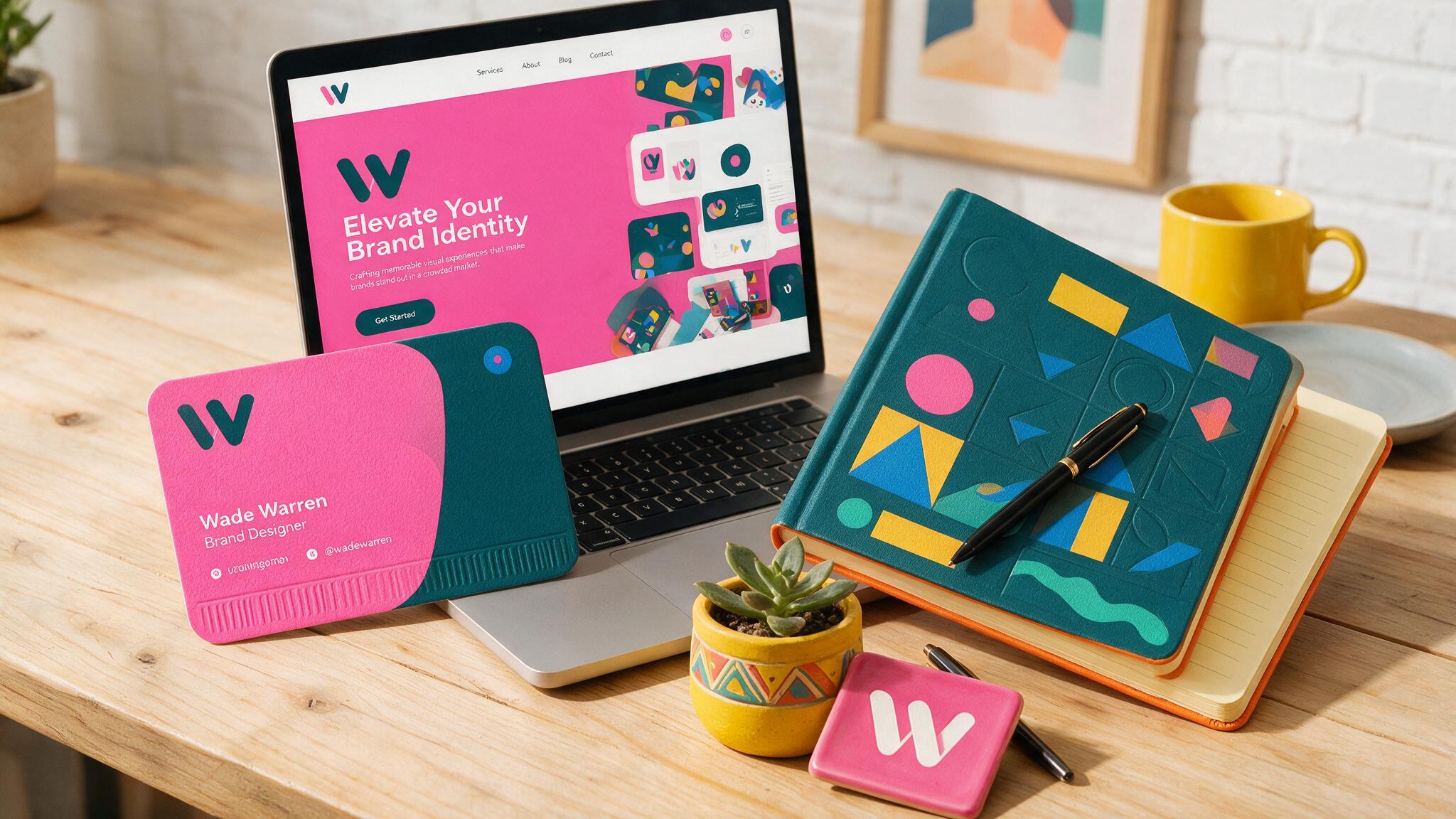
Consistency across every touchpoint is what makes a personal brand feel trustworthy at a glance.
How can you demonstrate expertise without sounding overly promotional, and what types of content help establish you as a knowledgeable professional?
The line between expertise and self-promotion usually comes down to who the content is actually for. Content that exists to help someone - answering a real question, explaining how something works, walking through a common problem - reads as expertise. Content that exists mainly to tell people how great you are reads as promotional, even if the underlying claim is true. Leading with usefulness and letting your competence show through the quality of that help, rather than stating it directly, tends to land much better.
Useful formats include short how-to posts, answering common customer questions publicly, before-and-after examples of real work, case studies that walk through a specific problem and how it got solved, and short video explanations of concepts your customers find confusing. None of it needs to be polished or produced - clear and genuinely helpful beats slick every time.
How do testimonials, reviews, and recommendations strengthen credibility, and what can you do when you don't have many yet?
Testimonials work because they say something a business can't credibly say about itself. A customer explaining exactly what problem you solved and how the experience felt carries a kind of trust that self-description never quite matches. Reviews and recommendations act as social proof - they tell a new customer "someone like you already took this risk, and it worked out."
When you're just starting and don't have a stack of testimonials yet, there are still ways to build proof. Offer a discounted or free project in exchange for an honest, detailed testimonial. Ask former colleagues, classmates, or people you've helped informally - even outside a paid context - if they'd be willing to speak to your work. Share process and behind-the-scenes content that shows your thinking, since it demonstrates capability even without a client name attached. And be upfront and confident about being new - people respect honesty more than a brand that oversells experience it doesn't have yet.
How important is consistency across your website, social media, business cards, and customer communications - and how does inconsistency affect confidence?
Consistency is one of the fastest, cheapest ways to look established, even if your business is brand new. When your website, social profiles, business card, and the way you actually talk to customers all line up - same name, same tone, same core message, same visual style - it signals that you're organized and paying attention to detail. That matters a lot to someone deciding whether to trust you with their time or money.
Inconsistency does the opposite, even in small ways. A polished website paired with a sloppy, off-brand social profile makes a customer wonder which version is the real one. A confident sales pitch followed by a vague, slow email response creates doubt about whether the follow-through matches the promise. Customers notice these gaps, even if they can't always articulate why something feels off, and it quietly undermines confidence before a conversation even starts.
What role does visual identity play, and how can you look professional while still showing your personality?
Visual identity - your colours, photos, logo, and overall design - is often the very first impression a potential customer forms, before they've read a single word. A clean, intentional visual identity signals professionalism and care. A mismatched, inconsistent, or low-effort one can undercut an otherwise strong pitch before it even gets a chance.
Looking professional and showing personality aren't in conflict - the key is picking a handful of consistent visual choices (a colour palette, a font pairing, a photo style) and then letting your actual voice and personality come through in the words, the tone, and the way you talk about your work. Professionalism is about consistency and intention, not about being generic or corporate. A personal brand with genuine personality, applied consistently, is far more memorable than a polished but interchangeable one.
Should your personal brand focus primarily on you as an individual, or on the business you're building?
For most self-employed professionals, the honest answer is both, in proportions that depend on the work. Service-based businesses built on relationships and trust - coaching, consulting, creative work, trades - usually benefit from leading with the individual, since customers are essentially hiring a person, not a faceless company. Businesses that need to eventually scale beyond one person, or that customers expect to feel more institutional, often benefit from building a business identity that can outlast any one individual's day-to-day involvement.
Even when the brand centres on the business name, the individual behind it still needs a visible, credible presence - customers still want to know who they're actually dealing with. The mix shifts over time, but a self-employed brand that hides the person entirely usually loses the trust advantage that made personal branding worthwhile in the first place.
How can you choose the right social media platforms, and how often should you post to stay visible without overwhelming your audience?
The right platform is wherever your actual customers already spend their time and expect to find someone like you - not the platform that's trending or the one you personally enjoy most. A B2B consultant likely gets more value from LinkedIn than TikTok. A visually-driven creative business might get more traction on Instagram. It's better to be consistently present on one or two platforms your customers actually use than spread thin across five.
On frequency, consistency matters more than volume. A steady, predictable rhythm - once or twice a week, reliably - builds more trust and recognition than a burst of daily posts followed by weeks of silence. The goal is staying visible enough that people remember you exist, without posting so often that your presence starts to feel like noise.
How can sharing your personal or professional story help customers connect with your brand, and what should you keep private?
Story creates connection in a way that credentials alone can't. Why you started this work, what problem you set out to solve, a challenge you overcame along the way - these details make a business feel human, and they give a potential customer a reason to root for you specifically, not just evaluate you on price and service list. People remember stories far longer than they remember service descriptions.
That said, not everything needs to be public. Financial details, health information, family conflicts, and anything you wouldn't want a client bringing up in a business conversation are generally worth keeping private. A good rule of thumb: share what makes you human and relatable, and keep what's genuinely personal for people you've chosen to share it with, not for a public audience evaluating whether to hire you.

Content that genuinely helps your audience builds more credibility than content that simply promotes you.
How do reliability, response time, and customer service contribute to your reputation, and how do you protect it when dealing with an unhappy customer or negative review?
Reputation is built less by what you say about yourself and more by what happens after someone hires you. Responding promptly, following through on what you promised, and handling problems with professionalism all quietly compound into a reputation for being reliable - which is often the single biggest factor in whether a customer refers you or comes back.
An unhappy customer or a negative review is uncomfortable, but how it's handled matters more than the fact that it happened. Responding calmly and professionally, without getting defensive, acknowledging the issue honestly, and offering to make it right where possible shows future customers reading that exchange that you handle problems with maturity. A single negative review handled well can actually build more trust than a perfect five-star record, because it proves how you behave under pressure.
Why does it matter that your public brand promises match the customer's actual experience - and how can networking and community involvement build visibility and credibility?
A brand that promises one thing and delivers another eventually gets found out, and the damage from that gap is usually worse than if the original promise had just been more modest. Overpromising to win business in the short term tends to cost far more in the long term, through refunds, bad reviews, and lost referrals. The strongest personal brands are honest about what they deliver and then consistently meet or exceed that promise.
Networking, community involvement, and professional partnerships build credibility in a way online content alone can't. Being known and trusted within a local business community, an industry association, or a professional network creates referral relationships and third-party credibility - people trust a recommendation from someone they already know far more than an ad. Showing up consistently, being genuinely helpful to peers, and building real relationships pays off over years, not weeks.

Real relationships built through networking and community involvement often generate the most trusted referrals.
What mistakes can weaken a self-employed professional's personal brand, and how can you measure whether it's attracting the right customers?
Common mistakes include inconsistent messaging across platforms, overpromising and underdelivering, going quiet for long stretches and then reappearing, copying a competitor's tone instead of developing a genuine voice, ignoring customer communication or reviews, and treating personal branding as a one-time setup instead of an ongoing practice. Any one of these can quietly undercut the credibility a brand took months to build.
Measuring whether a personal brand is working comes down to a few practical signals: are the right kind of customers finding you, rather than just any customers. Are people referencing specific things about you or your work when they reach out, which suggests your messaging is landing clearly. Are referrals and repeat business increasing over time. Are your rates able to move upward without losing customers, which usually signals growing trust and perceived value. These are more reliable indicators than follower counts or likes.
How should your personal brand evolve as your skills, services, and business goals change?
A personal brand isn't something to set once and leave alone. As skills deepen, services shift, or business goals change - moving from generalist to specialist, adding a new service line, raising rates to reflect real experience - the brand needs to catch up to reflect where the business actually is. A brand that's stuck describing who you were two years ago sends the wrong signal to the exact customers you want to attract now.
Revisiting messaging, visuals, and positioning periodically, rather than waiting until they feel badly out of date, keeps the brand working as an accurate, current reflection of the value being offered - which is ultimately what makes customers trust it enough to say yes.
Where can self-employed professionals get support building their brand and business?
Building a personal brand while also running the actual business can feel like a lot to figure out alone, especially in the early stages. Job Skills supports self-employed professionals and aspiring entrepreneurs across the GTA with resources, guidance, and connections to help turn a service or skill into a sustainable business - including the kind of positioning, credibility-building, and practical planning covered in this article. Whether you're just starting out or looking to grow what you've already built, having the right support behind you makes the process a lot less overwhelming.
Your Brand Is Your Business
When you're self-employed, there's no separating the two - your personal brand is the business, and every interaction either builds trust or costs you some. Credibility, consistency, expertise, and reputation aren't abstract marketing ideas. They're the practical, everyday signals that tell a potential customer whether you're worth the risk. Get those right, consistently, and the rest of the business tends to follow.
Ready to Build the Business Behind Your Brand?
Job Skills offers self-employment support and resources to help you turn your skills into a sustainable business - from getting started to growing what you've already built.
Explore Self-Employment Support