


Every HR professional knows the feeling: turnover spikes, productivity stalls, and the culture that once felt strong starts to quietly erode. What’s harder to quantify — and therefore easier to ignore — is the financial cost sitting underneath those symptoms. Disengaged employees aren’t just an HR problem. They’re a bottom-line problem, and the data makes that impossible to ignore.
The Numbers Don’t Lie
Gallup’s research has consistently found that disengaged employees cost the global economy trillions of dollars annually in lost productivity. In Canada, estimates suggest that actively disengaged workers cost employers roughly 34% of their annual salary in lost output alone. That’s before you factor in absenteeism, errors, customer service failures, and the downstream cost of replacing the people who eventually leave.
Replacing a mid-level employee typically costs between 50% and 200% of their annual salary when you account for recruiting, onboarding, training, and the productivity gap during transition. For organizations carrying even a modest percentage of disengaged staff, those numbers compound fast.
The problem isn’t that employees leave. The problem is the long stretch before they do.
The Quiet Cost: Presenteeism
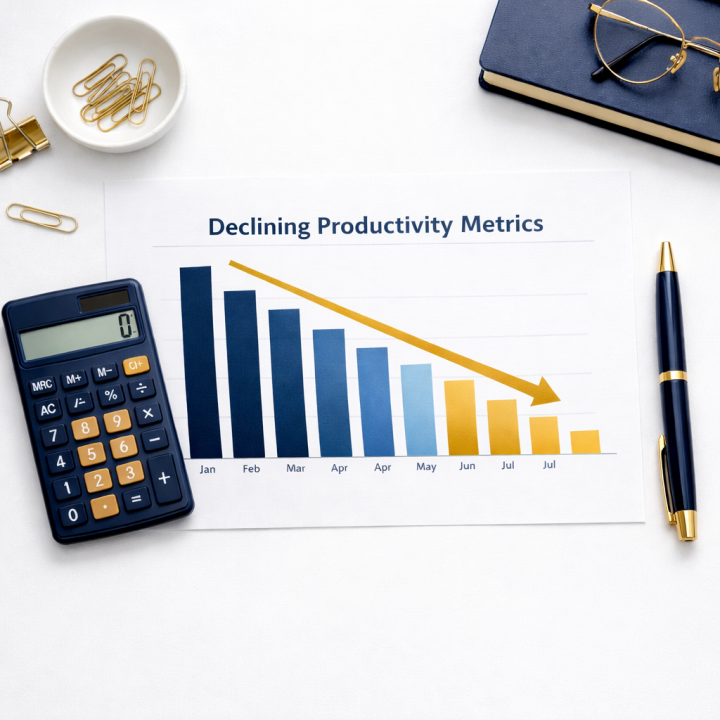
Turnover is visible. Presenteeism — the phenomenon of employees who show up but are mentally checked out — is not. Research published in the Journal of Occupational and Environmental Medicine has linked presenteeism to productivity losses that far exceed those caused by absenteeism. Disengaged employees complete tasks, attend meetings, and pass performance reviews while quietly dragging team morale and output in the wrong direction.
HR professionals are often the first to sense it and the last to have the data to prove it.
Why Traditional Approaches Fall Short
Annual performance reviews don’t capture it. Exit interviews arrive too late. Pulse surveys are frequently too generic to surface the real issues beneath the surface — workload imbalance, lack of recognition, unclear growth pathways, or a disconnect between stated values and actual workplace behaviour.
Without structured, actionable data, HR teams are left making decisions based on intuition rather than evidence. That’s a difficult position to defend to leadership, and an even harder position from which to drive meaningful change.
What Actually Moves the Needle
The organizations that successfully reduce disengagement share a few things in common: they listen systematically, they report transparently, and they act on what they hear. The listening part sounds simple, but most workplaces don’t have a mechanism that does it well.
A properly designed employee engagement survey — one that goes beyond satisfaction scores and digs into the specific drivers of engagement and disengagement — gives HR teams the evidence base they need to make a credible case for change. More importantly, it gives employees a voice, which is itself one of the strongest predictors of engagement.
That’s where Job Skills can help. Job Skills offers customized employee engagement surveys built specifically for Ontario employers, with clear, action-based reporting and built-in training support to help teams turn data into real workplace improvements. With nearly four decades of experience in employment and workforce development across the GTA, Job Skills brings a practical, employer-side lens that consultants working purely in the engagement space often lack.

The ROI of Getting This Right
Organizations in the top quartile for employee engagement outperform peers in profitability, productivity, customer ratings, and retention — consistently, across sectors and company sizes. That’s not a coincidence. Engaged employees take fewer sick days, generate better ideas, deliver stronger customer experiences, and stay longer.
For HR professionals, the business case for engagement isn’t hard to make. The harder challenge is finding the right diagnostic tool and implementation support to make the data actionable rather than decorative.
Disengagement is expensive, measurable, and largely preventable. The organizations that treat employee engagement as a strategic priority — not a once-a-year checkbox — are the ones building workplaces that attract and keep great people. HR has the influence to drive that shift. What it needs is the right data to back it up.
Is your organization flying blind on employee engagement? Job Skills offers affordable, customized employee engagement surveys with action-based reporting designed for Ontario employers. Get started here.