
Newcomer professional in Canada

You Worked Hard for Your Career. Canada Shouldn't Make You Start Over.

If you're a newcomer to Canada, chances are you already know this feeling. You've got years of education, training, and real professional experience behind you. You were a nurse, an engineer, an ECE, an accountant, or a business professional in your home country. And then you got here, and suddenly none of it seems to count.

You're told you need "Canadian experience." You're passed over for jobs you're more than qualified for. You end up taking whatever you can get just to pay the bills, and somewhere along the way, the career you worked so hard to build starts to feel further and further out of reach.

Here's what you need to know: that's not a you problem. It's a systemic problem, and it affects a lot of people.

The Numbers Don't Lie

A 2025 analysis from Toronto Metropolitan University found that roughly 1 in 4 immigrants identify employers not valuing their foreign credentials or work experience as a major barrier to employment. When you widen it to "major or moderate" barriers, more than 40% of newcomers in the labour force are raising their hands.

The result? Recent immigrants are more than twice as likely to be overqualified for the jobs they're doing compared to Canadian-born workers. That's not a coincidence. It's a pattern.

Ontario actually moved to address part of this in 2026, introducing new rules that ban "Canadian experience" requirements in job postings. That's a step forward. But rules on paper don't automatically change what happens in a hiring manager's head, and they certainly don't solve the challenge of getting your credentials evaluated and recognised in a new system. The barriers are real, and they run deep.

Newcomer job search support

The Cycle That Catches Too Many People

Here's what often happens: a newcomer arrives with strong professional qualifications. They can't get into their field right away because employers want Canadian experience, or because their credentials haven't been assessed yet. So they take a survival job, retail, warehousing, food service, something to stay afloat. Weeks turn to months. Skills start to rust. The gap on the resume grows. And getting back into their field becomes harder the longer it goes on.

It's not a fair situation. And it doesn't have to be the end of the story.

Where Job Skills Comes In

Job Skills has been working with newcomers across York Region and the GTA for over 35 years. The programs aren't one-size-fits-all, because the challenges newcomers face aren't one-size-fits-all either. Here's what's available to help you move forward.


Workplace training program

Simpact and Simpressions — Building Real Canadian Workplace Experience

One of the biggest hurdles isn't just credentials, it's the gap between knowing how to do your job and knowing how to navigate a Canadian workplace. Simpact and Simpressions tackle that head-on.

Both programs use a Practice Firm model, which is essentially a simulated workplace environment where you can build hands-on experience, develop your professional network, and get comfortable with Canadian workplace norms and communication styles, all before you ever set foot in a job interview. You'll work with facilitators, career coaches, and employer relations specialists, and you'll leave with a personalised return-to-work action plan and real support behind you.

Simpact runs out of the Richmond Hill Welcome Centre. Simpressions is based at Markham Employment Services. Both are available Monday to Friday, and both are free.

Learn More
Early childhood education assistant training

Early Childhood Educator Assistant (ECEA) — For Newcomers with Childcare Training

If you've got a background in Early Childhood Education, child development, or family support, this one's for you. The ECEA program is specifically designed for internationally trained individuals who have the skills and experience but need a pathway into Ontario's licensed childcare sector.

Over four weeks, you'll get up to speed on Ontario regulations, workplace culture, and sector-specific requirements, and you'll walk away with certifications that employers actually want to see, including Standard First Aid, CPR (infant and child), WHMIS, and Food Handler. The demand for ECEs and ECEAs in Ontario isn't slowing down, and this program is built to get you there.

Learn More
Healthcare career support

Bridge to Health Care Alternatives — For Internationally Trained Health Professionals

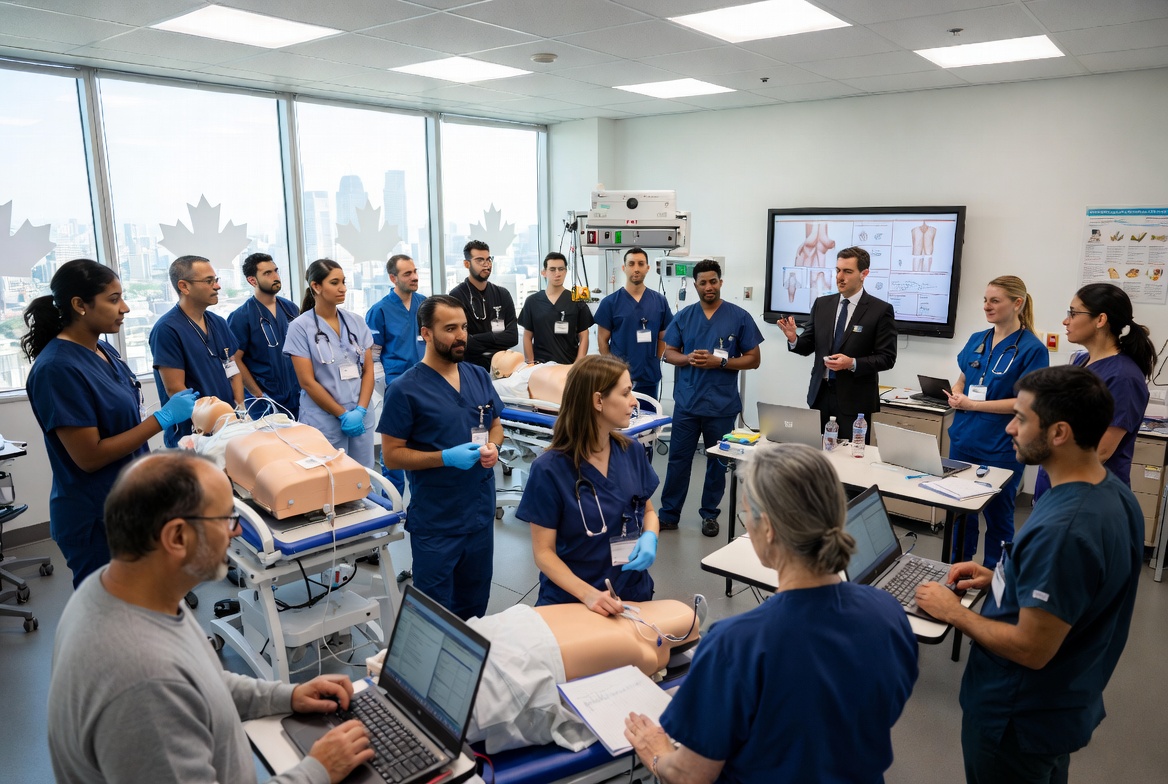
If you trained as a health care professional in another country, the road to re-entering your field in Canada can feel like a maze. The Bridge to Health Care Alternatives program exists specifically for people in that position.

Over the past three years, the program has supported more than 230 internationally trained professionals with health care experience in finding related careers. Whether you're working through credential recognition or exploring adjacent career paths in the sector, this program connects the dots between where you are and where you want to be.

Learn More

Employment Settlement Services — Your Starting Point

Not sure where to begin? That's exactly what Employment Settlement Services is there for.

Available at all five York Region Welcome Centres, Employment Settlement Specialists work with you one-on-one to build a personalised return-to-work action plan, support your job search, and help you figure out the best path forward based on your background and your goals. Whether you want to go it independently or need more guided support, it's free, it's personalised, and it's available to you now.

Learn More About Employment Settlement Services

Your Experience Has Value

The Canadian job market is changing. Labour shortages in health care, skilled trades, early childhood education, and beyond are real, and employers need people with exactly the kind of training and experience you bring. The gap between what newcomers have to offer and what the system currently recognises is a problem worth solving, and it's one that Job Skills has been working on for a long time.

If you're a newcomer navigating this, you don't have to figure it out alone. Reach out to Job Skills at jobskills.org or call 1-866-592-6278. There's a next step available to you, and someone ready to help you take it.

Visit Job Skills

Frequently Asked Questions

1. Why do newcomers often struggle to restart their careers in Canada?

Many newcomers arrive with years of education, training, and professional experience, but face barriers such as employers not recognizing foreign credentials, requests for Canadian experience, and difficulty navigating a new employment system.

2. Is needing “Canadian experience” a common barrier?

Yes. The blog explains that many qualified newcomers are told they need Canadian experience, which can prevent them from accessing jobs they are already qualified for.

3. What happens when newcomers take survival jobs?

Survival jobs can help pay the bills, but over time they may pull newcomers further away from their original careers. Skills can start to rust, resume gaps can grow, and returning to their field can become harder.

4. How does Job Skills support newcomers?

Job Skills offers personalized programs and services for newcomers across York Region and the GTA, including workplace experience programs, sector-specific training, health care career support, and employment settlement services.

5. What are Simpact and Simpressions?

Simpact and Simpressions are programs that use a Practice Firm model, creating a simulated workplace environment where newcomers can build hands-on experience, develop professional networks, and become familiar with Canadian workplace norms.

6. Who is the Early Childhood Educator Assistant program for?

The ECEA program is for internationally trained individuals with a background in Early Childhood Education, child development, or family support who need a pathway into Ontario’s licensed childcare sector.

7. What certifications can ECEA participants receive?

Participants can receive certifications that employers value, including Standard First Aid, CPR for infants and children, WHMIS, and Food Handler certification.

8. What is Bridge to Health Care Alternatives?

Bridge to Health Care Alternatives supports internationally trained health professionals who are working through credential recognition or exploring related career pathways in Canada’s health care sector.

9. What are Employment Settlement Services?

Employment Settlement Services help newcomers create personalized return-to-work action plans, support their job search, and identify the best next steps based on their background and career goals.

10. How can newcomers get help from Job Skills?

Newcomers can reach out to Job Skills through jobskills.org or call 1-866-592-6278 to explore programs, services, and next steps for rebuilding their careers in Canada.

X
X