
Job searching in Canada has never been simple, but lately it has felt especially unpredictable. Many people are applying to dozens of roles with little to no response, while employers are working hard to find qualified candidates who actually stay. At the same time, the Canadian labour market continues to shift, with technology, rising costs, and changing workplace expectations creating uncertainty for everyone.
That is why a new update in Ontario is getting so much attention. It speaks to frustrations that show up across the country, and it signals where hiring norms are heading next.
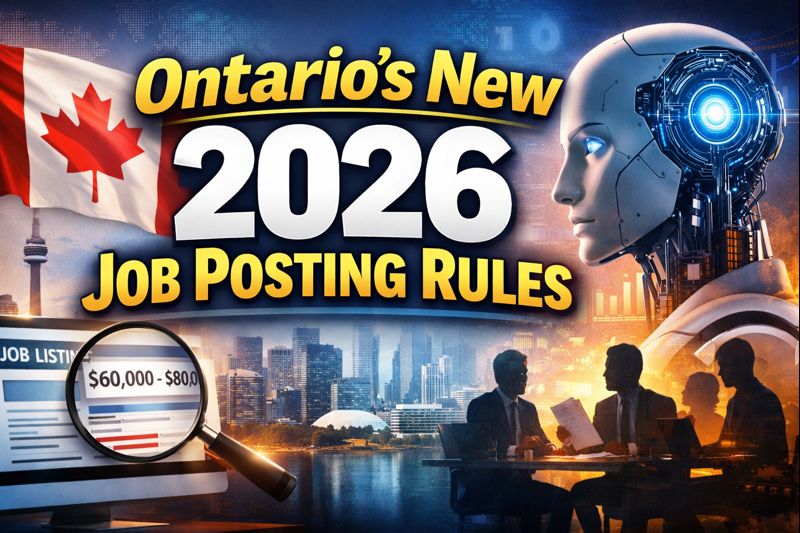
Ontario is updating the Employment Standards Act to require more transparency in job postings, including salary ranges, whether a role is truly vacant, and whether AI will be used during candidate selection, starting January 1, 2026. Companies with 25 or more employees will also need to follow up with interviewees within 45 days, helping reduce the common experience of being ghosted after interviews. These changes aim to reduce frustration and improve fairness in hiring, even though some experts question how meaningful pay transparency and AI disclosure will be without stronger guidelines. This summary is based on “A new Ontario law means your job search might look a little different in 2026” by Olivia Piercey of CBC News (CBC Toronto). Click here to read the full article.
Even if you are not job searching in Ontario today, policies like this often influence expectations elsewhere. They also reflect something many Canadians already feel: the job search process can be exhausting, and hiring has become more complex to manage at speed.
Why this matters to job seekers
More transparent postings can help people make better decisions earlier. When salary ranges and vacancy status are visible, it is easier to focus time on roles that truly match your needs. Knowing whether AI is used can also shape how you approach an application, especially when resume keywords and clear formatting may affect screening.
At the same time, transparency does not automatically guarantee a smooth process. Job seekers still benefit from strong fundamentals: a targeted resume, confident interview skills, and a plan for consistent follow-up. If you want to sharpen those skills, Job Skills offers practical support through job search workshops that help turn effort into traction:
Why this matters to employers
For employers, these changes can feel like added compliance, but they can also be an advantage. Clear salary ranges can reduce misaligned applications and attract candidates who are more likely to accept an offer. A reliable follow-up process can protect your reputation and reduce candidate drop off, especially when hiring timelines stretch across multiple rounds.
New expectations also push internal clarity. If a role is posted, it should be truly open. If pay ranges are shared publicly, they should align with internal compensation practices. If AI is used, hiring teams should understand what it is doing and be prepared to explain it in plain language.
Employers who want to strengthen hiring systems and candidate experience can explore Job Skills employer services here:
Practical tips for job seekers
Use salary ranges as a research tool, not just a deciding factor. Compare them to market rates and your experience level.
Make your resume easy to scan by focusing on relevant skills, measurable outcomes, and job specific keywords.
Keep a simple tracking system for applications, interview dates, and follow-ups so you stay proactive without feeling overwhelmed.
Prepare a short, clear introduction that explains who you are, what you offer, and what you are aiming for.
If you are new to Canada, seek out supports that understand credential pathways and local hiring norms, including Job Skills Newcomer services.
Practical tips for employers
Write postings that reflect the real job, with clear responsibilities and must have qualifications.
Set pay ranges that are realistic, defensible, and aligned internally so transparency builds trust rather than confusion.
Standardize interview steps and timelines so candidates know what to expect and managers can move efficiently.
Create a follow-up habit that is consistent, even when the answer is no. It improves brand perception and keeps doors open for future hires.
If AI is used, document how it fits into decision making and review outcomes to reduce unintended bias.
How Job Skills helps both job seekers and employers
Labour market change can be disruptive, but it can also be an opportunity to improve how people connect to work. Job Skills supports job seekers with structured programs that build confidence, clarify goals, and improve results, including hands on workshops for resumes, interviews, and job search strategy: https://www.jobskills.org/job-search-workshops/
On the employer side, Job Skills helps organizations hire smarter by supporting recruitment, candidate matching, and workforce planning through employer focused services: https://www.jobskills.org/employers-2/
If you want more context on how the market is shifting, this recent Job Skills post on Ontario labour trends adds useful perspective:

Because when hiring expectations evolve, the people and organizations who adapt early tend to do more than keep up. They pull ahead.