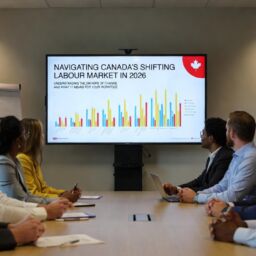


At a recent Canadian Club event in Toronto focused on Canada’s 2026 economic outlook, a panel of respected economic voices agreed on something many Canadians have been feeling for months: global uncertainty is rising, and it is reshaping how countries do business.
The panel noted that Donald Trump’s disruptive approach to global politics and trade has created turbulence. It has raised new risks and complicated old assumptions. Yet the discussion also struck a surprisingly practical tone. The message was not simply about instability or anxiety. Instead, it was about how disruption can trigger action, especially in economies that have been slow to modernize.
In other words, Canada may be facing a wake up call.
For employers, this means the coming year could bring both challenges and opportunities, particularly in talent planning, hiring, training, and retention. For job seekers, it could mean a job market that rewards adaptability, skill building, and readiness to move toward new sectors and emerging roles.
The question is not whether things are changing. The question is how Canadians will respond.
And for both employers and job seekers, there is a clear answer: prepare early, invest in skills, and take advantage of the “easy wins” that change often reveals.
A wake up call Canada cannot ignore
Canada has many strengths: stable institutions, strong communities, a highly educated workforce, and global credibility. But the panel at the Canadian Club event highlighted a reality that is hard to deny: Canada has experienced years of economic inertia.
When an economy moves slowly, it can drift into habits that feel normal but are quietly costly. Investment stalls. Productivity lags. Innovation becomes harder. Regulation becomes more complex. Businesses spend more time managing compliance than building growth. Workers feel stuck between rising living costs and limited advancement pathways.
The panel’s core point was that global disruption, while unsettling, is now forcing Canada to revisit its fundamentals. That includes investment, productivity, and regulation.
For employers, this should be heard as both a warning and a motivation. If competitiveness becomes the priority, businesses that innovate early will gain ground. Those that wait will face steeper catch up costs.
For job seekers, it signals a shift in what will be rewarded. A changing economy tends to favour people who build relevant skills before they are urgently required.
What employers should do right now
In uncertain economic periods, it is tempting for employers to take a defensive approach. Pause hiring. Delay training. Stretch teams thinner. Wait for clarity.
But many employers know that the “wait and see” strategy often comes with a hidden price: missed opportunities, burnout, and losing top talent to competitors that stay proactive.
Here are several practical ways employers can respond.
1. Invest in talent the way you invest in equipment
In a more competitive economy, skills are not a nice to have. They are infrastructure.
Employers should strengthen internal training plans and build clearer development paths for employees. This is especially important in sectors where automation, new technologies, and shifting customer needs are changing job requirements quickly.
Training does not need to be expensive to be effective. What matters most is consistency and relevance.
2. Prioritize productivity through role clarity
Productivity is not only about working faster. It is about removing friction.
Many teams are weighed down by unclear responsibilities, outdated workflows, and duplicated tasks. Employers can create immediate productivity gains by revisiting job descriptions, simplifying processes, and clarifying expectations.
These changes also support employee engagement, because people tend to feel more confident and motivated when they understand what success looks like.
3. Hire for adaptability, not just experience
In stable times, employers often hire for exact match experience. In shifting times, strong learners become the best long term investment.
Candidates who can problem solve, communicate, and adapt to new tools may outperform someone with a perfect background but limited flexibility.
Employers should consider hiring based on potential and transferable skills, not only industry history.
4. Strengthen retention by strengthening respect
Retention is not just about wages. It is also about how people are treated.
In a climate that may require faster change and modernization, employees want to know they are respected, supported, and included. Employers that communicate clearly, offer stability where possible, and involve staff in solutions will keep their best people.
What job seekers should do right now
If Canada’s economy is about to modernize more quickly, job seekers have a major opportunity. Modernization creates movement. It opens doors. It encourages hiring. It pushes employers to rethink what talent they need.
But job seekers will benefit most if they respond intentionally.
1. Focus on what employers need next, not what they needed last year
Many job seekers spend time perfecting a resume based on past experience. A better strategy is to align your story with what employers need now.
Ask yourself:
- What problems can I help solve?
- What skills will become more valuable over the next twelve months?
- What roles are growing because of economic changes?
Then frame your resume and interviews around those answers.
2. Build skills that travel well
In a shifting economy, the most valuable skills are transferable.
These include:
- Digital literacy and comfort with new systems
- Communication and teamwork
- Customer service and conflict resolution
- Time management and reliability
- Problem solving and initiative
- Basic financial and data awareness
- Continuous learning habits
Even small upgrades, like improving Microsoft Excel skills or earning a safety certification, can open new options quickly.
3. Be open to new sectors and adjacent roles
Economic disruption often changes hiring patterns. A sector that slows down may still have roles that remain stable. Another sector may surge due to investment or demand.
Job seekers can increase success by considering adjacent roles that match their skills.
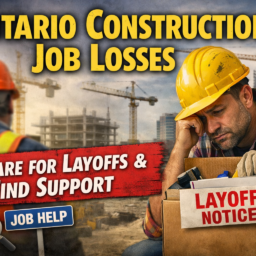
For example, someone with retail customer service experience may transition well into health care administration, insurance support, call centres, logistics, or entry level banking roles. Someone with hands on construction experience may transition into safety coordination, project support, or skilled trades pathways.
The best job search plans are flexible without being directionless.
4. Treat your job search like a project
When uncertainty rises, competition can increase. That means job seekers benefit from structure.
Set weekly targets:
- Number of quality applications
- Number of networking messages sent
- Skills practice hours
- Interview preparation time
- Follow up actions
Tracking progress reduces stress and improves results.
Where the new opportunities may emerge
The panel’s message was that Canada has “easy wins” available if it follows through on reform and modernization. For the labour market, that often translates to demand in areas that support growth, efficiency, and resilience.
While every region is different, employers and job seekers may see stronger opportunity in:
- Infrastructure and construction
- Skilled trades and maintenance
- Advanced manufacturing and automation support
- Logistics and supply chain coordination
- Health care and community services
- Financial services and risk management
- Clean energy and environmental services
- Cybersecurity and IT support
- Business operations and compliance roles
Importantly, not every opportunity will be a high tech job. Many “modernization” jobs are practical, hands on, and people facing. Growth requires both digital systems and strong human service.
How Job Skills can help employers and job seekers thrive
In times like this, the gap between potential and action can be wide. People know they should train, plan, and adapt, but they may not know where to start.
This is exactly where Job Skills can help.
Support for job seekers
Job Skills helps people move from uncertainty to employment through practical steps, including:
- Career exploration and goal setting
- Resume and cover letter support
- Interview preparation and confidence building
- Job search strategies that match current market needs
- Skills training connections and referrals
- Support for newcomers, youth, and career changers
- Employment readiness and workplace success coaching
For job seekers, the goal is not just finding any job. It is finding a realistic next step that builds momentum.
Support for employers
Job Skills also partners with employers who want to hire effectively and retain talent by offering:
- Candidate matching and recruitment support
- Guidance on inclusive hiring practices
- Support for onboarding and retention strategies
- Connections to wage subsidies and hiring incentives when available
- Training and workforce development guidance
- Local labour market insight and job posting support
Employers do not need more paperwork. They need a reliable partner who helps them find and develop the talent they need.
ABOUT JOB SKILLS
Since 1988, Job Skills has been delivering solutions to job seekers and moving people into sustainable, meaningful employment. Throughout their long history, Job Skills has recognized that not every job seeker is the same. There is no one size fits all employment program. That’s why the Job Skills vision is building an inclusive society where all people are ensured equitable opportunities to fulfill their career aspirations and participate fully in the community.
Job Skills’ employment specialists are there to answer any of your employment questions. Job Skills‘ staff offer solutions to all job seekers, including youth, newcomers, mature workers, persons with disabilities, and entrepreneurs. Job Skills’ knowledgeable team can help you make educated decisions, set goals, and create a strategy to help you become happier in your career. Job Skills works with local employers creating employment opportunities for Job Skills’ clients.
Thanks to government funding, Job Skills’ programs and services are free to all users. Job Skills have locations across Keswick, Stouffville, Markham, Brampton, and Mississauga. Job Skills also offers virtual services for community members unable to attend one of our offices for in-person activities.
Find your employment solution today. Visit www.jobskills.org