

Why Canada’s Next Economic Boom May Be Closer Than You Think and What It Means for Workers
Royal Bank of Canada chief executive Dave McKay has delivered a message that cuts through much of the economic uncertainty Canadians have felt over the past few years. In an interview with the Financial Post, McKay said he is “more excited about Canada’s growth outlook than I’ve been in a decade.” The article, written by Barbara Shecter, outlines why Canada may be better positioned for future growth than many people realize, even as some sectors continue to struggle.
McKay did not dismiss the real pressures facing households and businesses. High interest rates, inflation and affordability challenges have slowed spending and increased stress for many Canadians. However, he emphasized that these headwinds are temporary when viewed against Canada’s broader economic fundamentals. According to McKay, population growth, particularly through immigration, is strengthening labour supply and consumer demand. At the same time, business investment is beginning to recover as confidence improves.
One of the key themes highlighted in Shecter’s article is growing international interest in Canada. McKay noted that global investors are increasingly taking a “risk on” view of the country. Canada’s stable financial system, predictable regulatory environment and strong institutions make it attractive in a world marked by geopolitical uncertainty. McKay also pointed to Canada’s natural resources, including energy and critical minerals, as long term advantages that will support growth for years to come.
Large scale investment is another major factor shaping RBC’s optimism. McKay identified infrastructure development, energy transition projects, defence spending and advanced manufacturing as areas expected to drive economic expansion. These investments are not only significant in size, but also broad in impact, supporting jobs across regions and skill levels. While growth may not be evenly felt across all industries, McKay suggested the overall direction is positive.
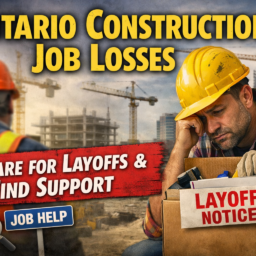
That uneven recovery is especially relevant for workers in sectors facing economic pressure. The auto industry is a clear example. Automation, global competition and the shift toward electric vehicles have changed labour demand, leading to job losses and uncertainty in some communities. For workers who have built careers in traditional manufacturing roles, this transition can feel disruptive and personal.
However, the same forces reshaping the auto sector are also creating new opportunities. RBC’s outlook points to growth in clean energy, battery production, logistics, technology, health care and modern manufacturing. Many of these sectors value the same foundational skills found in manufacturing, including attention to detail, safety awareness, mechanical aptitude and problem solving. This means workers are often better positioned for transition than they may initially believe.
For example, experience with precision assembly, quality assurance or equipment maintenance can translate well into roles in renewable energy, industrial maintenance or advanced manufacturing facilities. Workers familiar with production timelines and supply chains may find opportunities in logistics and distribution. With targeted training, others may move into technology supported roles that combine hands on work with digital tools.
Reskilling does not always require a complete career restart. Short term training programs, certifications and focused upgrading can help workers bridge skill gaps efficiently. Learning to operate automated systems, understand digital platforms or work with sustainable technologies can open doors to growing sectors. The key is access to clear labour market information and guidance on which skills are in demand.
This is where Job Skills plays a critical role. Job Skills supports individuals who are navigating layoffs, career transitions or economic uncertainty by providing structured, practical assistance. Rather than offering one size fits all solutions, Job Skills works with clients to understand their experience, strengths and goals.
Career planning is a central part of this process. Through assessments and one on one support, Job Skills helps individuals identify transferable skills and explore realistic pathways into growing industries. This clarity is especially valuable for workers leaving long held roles, as it replaces uncertainty with actionable options.
Job Skills also connects clients to training and education aligned with employer needs. Whether someone requires technical certification, digital skills training or industry specific credentials, Job Skills helps ensure that time spent upgrading leads to real employment opportunities. Clients also receive support with resumes, interview preparation and job search strategies that reflect current hiring practices.
Equally important are Job Skills’ employer partnerships. By working directly with employers in growing sectors, Job Skills helps bridge the gap between job seekers and available roles. This connection increases placement success and gives workers confidence as they move into new industries.
As Canada’s economy evolves, change is unavoidable. RBC’s outlook suggests that while some sectors will face continued pressure, others are poised for meaningful growth. With the right support, workers can adapt, reposition and thrive. Job Skills helps ensure that economic change becomes a pathway to opportunity rather than a barrier, empowering Canadians to build stable and fulfilling careers in the next phase of Canada’s economy.
ABOUT JOB SKILLS
Since 1988, Job Skills has been delivering solutions to job seekers and moving people into sustainable, meaningful employment. Throughout their long history, Job Skills has recognized that not every job seeker is the same. There is no one size fits all employment program. That’s why the Job Skills vision is building an inclusive society where all people are ensured equitable opportunities to fulfill their career aspirations and participate fully in the community.
Job Skills’ employment specialists are there to answer any of your employment questions. Job Skills‘ staff offer solutions to all job seekers, including youth, newcomers, mature workers, persons with disabilities, and entrepreneurs. Job Skills’ knowledgeable team can help you make educated decisions, set goals, and create a strategy to help you become happier in your career. Job Skills works with local employers creating employment opportunities for Job Skills’ clients.
Thanks to government funding, Job Skills’ programs and services are free to all users. Job Skills have locations across Keswick, Stouffville, Markham, Brampton, and Mississauga. Job Skills also offers virtual services for community members unable to attend one of our offices for in-person activities.
Find your employment solution today. Visit www.jobskills.org